EBTD | Climate for Learning in Bangladesh (BD)
Why “Behaviour” Was the Wrong Question — and Climate for Learning Is the Right One
Most schools don’t need louder discipline. They need clearer leadership, stronger learning structures, and calmer everyday practice that protects thinking time — especially in large, exam-pressured classrooms.
Behaviour is not the starting point
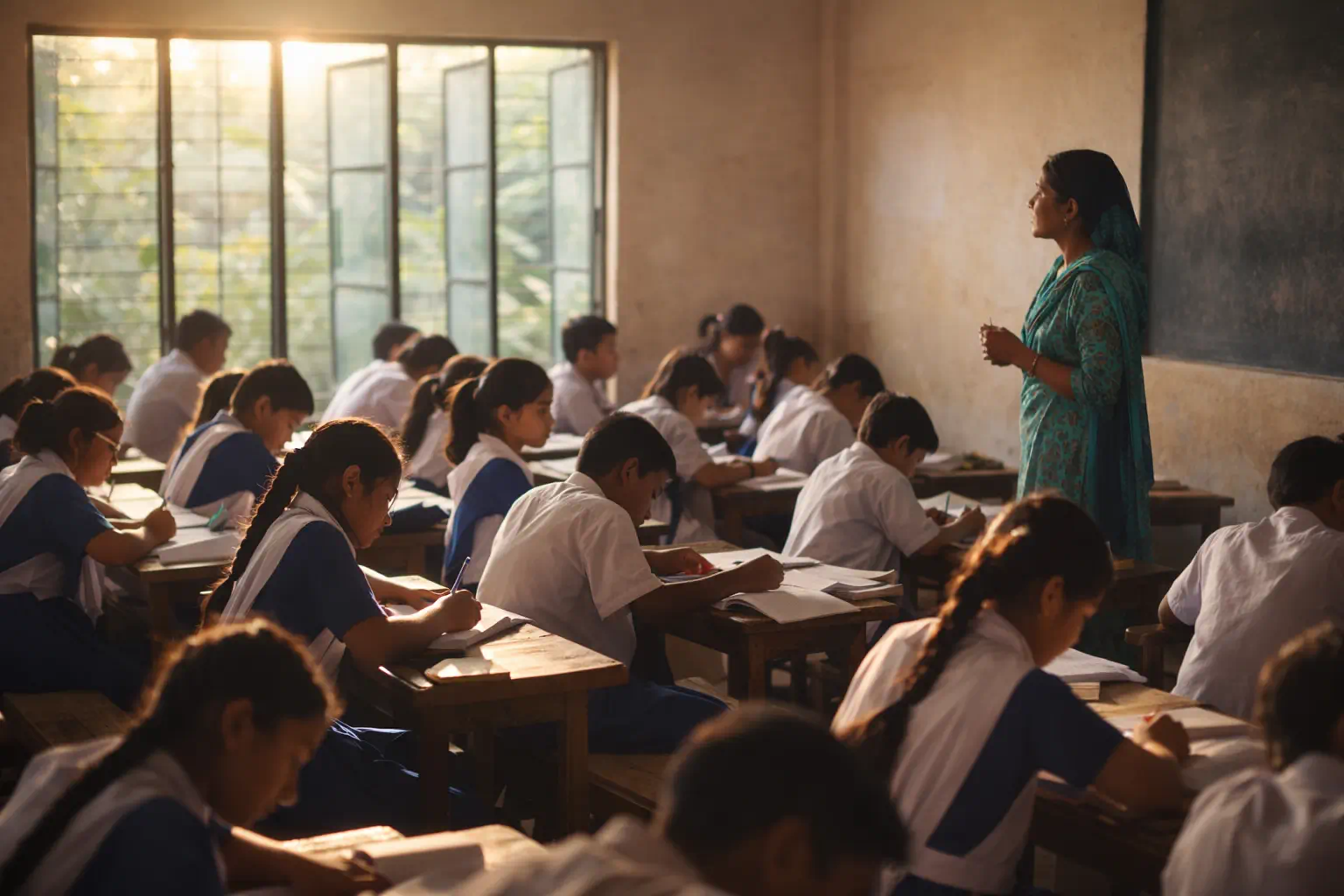
In many Bangladeshi schools, behaviour is not “bad” in the traditional sense. Pupils are respectful. Authority exists. Teachers care deeply. Yet learning time is still lost: transitions drag, attention drifts, low-level noise creeps in, and participation narrows to the same confident few.
These are not failures of discipline. They are signs of a fragile learning climate.
A strong climate for learning is not enforced. It is designed, taught, and sustained.
That is why EBTD has developed the Foundations of a Climate for Learning (Bangladesh) — a research-informed, practice-facing framework designed to protect learning time in real classrooms.
A climate for learning is three things working together
Climate initiatives often fail when schools treat them as isolated actions: a new policy, a new routine, a new consequence ladder, a one-off training day. In reality, climate only holds when three interlinked areas are aligned.
Leadership and collective responsibility
Climate begins with what leaders prioritise and protect every day — not what policies say on paper.
Structures for learning
Shared routines and taught learning behaviours reduce friction and cognitive load so pupils can think.
Everyday classroom practice
Climate is maintained through thousands of small adult decisions under pressure — calm, consistent, and purposeful.
Each foundation sits primarily within one area of focus, but depends on all three.
Explore the seven foundations
The seven foundations are not a checklist and not a sequence. They are interdependent conditions that protect learning time. Start where your school’s biggest friction sits — leadership, structures, or classroom practice — and build from there.
Leadership deliberately shapes the climate for learning
Climate reflects what leaders model, notice, and protect — not what policies say on paper.
Explore this foundation →Consistency creates safety, fairness, and focus
Predictable expectations and responses reduce anxiety and free attention for learning.
Explore this foundation →Climate for learning is sustained through professional learning
Without ongoing adult learning, even strong climates decay over time.
Explore this foundation →Simple routines structure thinking and learning time
Shared routines reduce cognitive load and minimise friction, allowing pupils to focus on learning.
Explore this foundation →Learning behaviours are explicitly taught
Attention, listening, participation, and persistence are taught through structure, modelling, and practice.
Explore this foundation →Proactive classroom practice prevents disruption
Clear explanations, purposeful tasks, and active monitoring reduce the need for correction.
Explore this foundation →Fair and predictable responses reinforce shared norms
Calm, proportionate responses protect dignity while reinforcing expectations when learning is disrupted.
Explore this foundation →Why this matters now in Bangladesh (BD)
Bangladesh does not need harsher compliance models. It needs clarity, coherence, and consistency. When climate is weak, teachers work harder but see less impact. When climate is strong, learning time increases without escalating sanctions, and teaching quality has space to take hold.
When climate is weak
- Teachers work harder but see less impact
- Pupils comply but disengage
- Initiatives fade after one term
- Learning time leaks through friction
When climate is strong
- Learning time increases without harsher sanctions
- Teachers feel supported rather than blamed
- Pupils participate more confidently
- Teaching quality can finally take hold
Climate is not a behaviour initiative. It is the enabling condition beneath great teaching.
Explore the full hub
If you are a school leader, teacher, or policymaker working in Bangladesh, this work is for you. It is free, evidence-informed, and designed for real classrooms.